Skip to content

Dental Implants in Parker, CO

A dental implant is a titanium “screw-like” post that is surgically placed in the jaw bone.  Following the surgical placement of the dental implant, we want the implant to properly heal and stabilize in the bone before putting the implant abutment and crown on.  Often times when teeth are not replaced other teeth in the mouth will become loose, sore, and shift.  These types of problems can lead to jaw pain, gum disease, chewing problems, and many other dental issues. It is always a good idea to replace a missing tooth as soon as possible.

WHAT OUR PATIENTS SAY

Thank you, Jake, for the wonderful review! It was a pleasure doing your dental implant work.

Am I a candidate for dental implants?

Are you missing teeth? Are your teeth moving and shifting? Do you have trouble chewing? Do you hate your complete denture or removable partial denture? Did you have a tooth extraction and now would like to replace a missing tooth? If you answered yes to any of the above questions you are likely a candidate for a dental implant or dental implants to make your mouth whole again or stabilize your denture.  Dental implants have become the gold standard amongst tooth replacement options.  Over the years dental implants have become a very predictable and successful treatment modality for the replacement of missing teeth.

All on 4 aka “Teeth in a Day”

If you have dentures or know that you need dentures, but do not want them to become loose and fall out, we offer dental implant procedures to secure or “bolt on” your denture so that it does not come in or out. This type of procedure is the best dentistry has to offer to help patients that have lost their teeth feel like they have natural teeth again. Patients with non-moveable dentures secured with dental implants experience much more confidence smiling and are able to eat significantly better than denture patients without implant support.

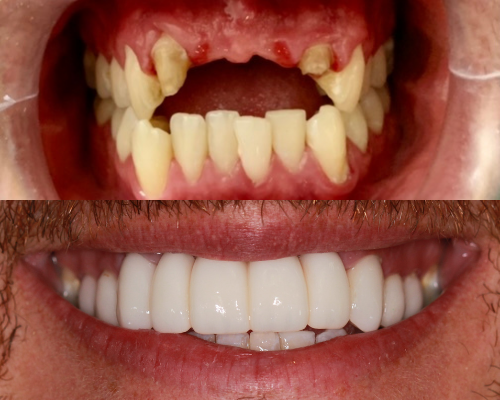
dental implants and veneers parker co

Cone Beam Technology

Computer Guided implant surgery has led to increased implant placement accuracy, decreased healing time, shorter procedure time, more predictable implant placement. Dr. Green offers dental implant surgery and has taken courses with the following notable leaders in dental implant education: Blue Sky Bio Academy, Dental Implant Seminars, Nobel Biocare, Zimmer Institute.

Frequently Asked Questions

Dental implants are designed to be a long-lasting solution for missing teeth. The titanium post placed in the jawbone integrates well with the bone, creating a stable foundation that can last a lifetime if properly cared for. However, the visible crown attached to the implant may need to be replaced after several years, typically around 10 to 15 years, depending on oral hygiene and lifestyle. Regular dental check-ups, proper brushing, and flossing can ensure the longevity of your implants.

Dental implants and dentures are both used to replace missing teeth, but they differ significantly in terms of design, functionality, and comfort.

  • Functionality: Dental implants restore natural chewing function, enabling you to eat foods like you would with natural teeth. They maintain chewing force and bone structure in the jaw. In contrast, dentures may lead to bone loss over time and decrease your chewing ability.
  • Permanent vs. Removable: Dental implants are permanent fixtures that do not need to be removed. They involve the placement of a titanium screw into the jawbone, which integrates with the bone to form a solid foundation for the artificial tooth. Dentures, on the other hand, are removable and require regular cleaning and maintenance.
  • Aesthetics and Comfort: Implants mimic natural teeth more closely, providing a more secure fit and more natural-looking results. Dentures, although improving the appearance of your smile, may not feel as secure and could shift or slip while speaking or eating.

The recovery time after dental implant surgery varies from patient to patient, but most people can expect the following timeline:

  • First Few Days: After the implant placement, there may be discomfort, swelling, and bruising. These symptoms typically peak within 48 hours and start to subside as the healing process continues.
  • Two Weeks: A follow-up visit is scheduled after about two weeks to evaluate how the implant site is healing, remove any sutures, and assess any pain or discomfort.
  • Full Healing: While the initial discomfort may resolve in a few days, full healing of the implant site can take several months. The bone needs time to fuse with the titanium post, a process known as osseointegration. This can take anywhere from three to six months, depending on the individual’s health and bone quality.

The idea of having a titanium post inserted into your jawbone may sound intimidating, but dental implants are relatively pain-free compared to other dental procedures like extractions or root canals. While there may be some soreness after the surgery, the procedure itself is usually well-tolerated.

  • Before the Procedure: Local anesthesia or sedation is used to ensure you are comfortable and pain-free during the surgery.
  • After the Procedure: You may experience mild discomfort, swelling, or bruising around the implant site. This can usually be managed with over-the-counter pain relievers and should subside within a few days.
  • Healing Process: The pain or discomfort typically reduces after the first 48 hours, and patients are generally able to return to normal activities within a few days.

Dental implants are suitable for most adults who are in good health. However, there are certain factors that can affect whether you’re a good candidate:

  • Healthy Jawbone: Dental implants need a strong and healthy jawbone to anchor the titanium post. If there is significant bone loss due to prolonged tooth loss, a bone grafting procedure may be necessary to restore bone density before the implant procedure.
  • Overall Health: Good general health is essential for successful implant placement. Individuals who are non-smokers and not diabetic generally have a higher success rate with implants, as smoking and uncontrolled diabetes can hinder the healing process.
  • Oral Health: Maintaining good oral hygiene is essential for the success of the implant procedure. Gum disease or untreated cavities should be addressed before proceeding with dental implants.

Dr. Siracusa explains that healthy adults with good bone quality are the best candidates. Those with chronic conditions, such as diabetes or smokers, may need to take additional precautions or undergo specialized treatments to improve their chances of a successful outcome.

The dental implant procedure involves several stages:

  • Consultation: The first step is a consultation with your dentist, where they will take a 3D X-ray of your jaw to assess the bone density and determine if you are a good candidate for the procedure.
  • Implant Placement: During the surgery, a titanium post is surgically placed into your jawbone. This post will act as a man-made tooth root, providing a solid foundation for the replacement tooth.
  • Healing: After the implant is placed, the jawbone will need time to heal and fuse with the implant. This process, known as osseointegration, typically takes several months.
  • Attaching the Restoration: Once healing is complete, a custom-made crown is attached to the titanium post, completing the dental implant.

Dental implants offer numerous benefits over traditional tooth replacement methods like dentures and bridges:

  • Permanent Solution: Unlike dentures, which need to be removed and cleaned, dental implants are permanent and function like natural teeth.
  • Improved Function: Implants restore full chewing function, allowing you to eat all types of food without restrictions.
  • Preservation of Bone: One of the most important benefits of dental implants is that they help preserve the bone in your jaw. Unlike dentures, which can cause bone loss over time, implants stimulate the bone and help maintain its structure.
  • Enhanced Aesthetics: Implants are designed to match the appearance of natural teeth, resulting in a beautiful, confident smile.
  • Comfort: Since dental implants are anchored securely in your jaw, there’s no discomfort associated with shifting or slipping like you might experience with dentures.

While dental implants are generally safe and effective, as with any surgical procedure, there are some risks involved. These can include infection, implant failure, or nerve damage. However, these risks are rare and can often be mitigated by selecting a skilled and experienced dental professional like Dr. Siracusa. It’s also essential to follow post-operative care instructions closely to ensure proper healing.

We Welcome Same Day Emergency Appointments!