
If you’ve ever faced the frustration of waiting weeks for a dental crown or worried about the long-term reliability of same-day options, you’re not alone.
Continue reading

If you’ve ever faced the frustration of waiting weeks for a dental crown or worried about the long-term reliability of same-day options, you’re not alone.
Continue reading
If you or a loved one struggles with chronic snoring or obstructive sleep apnea, you know how exhausting sleepless nights and constant fatigue can feel.
Continue reading
When most people think about Invisalign, they usually focus on one thing: straightening their teeth for a more attractive smile.
Continue reading

The New Year is the perfect time to start fresh. Whether you’re starting fresh with a healthy lifestyle or with well-deserved self-care, you should make improving your oral hygiene a priority. A dentist in Parker CO, Dr. Christopher Green, can offer dental appointments that’ll address any and all of the dental concerns that you are facing. Perhaps you’ve neglected your oral health over the past year? Perhaps you’re finally ready to take steps to undergo a number of cosmetic dentistry procedures like getting veneers? Dr. Christopher Green and Dr. Ionescu have some New Year resolutions for oral hygiene that you can use.
Even those who brush after every meal may not be brushing their teeth in the right way. Try to learn the correct ways of brushing your teeth so that you can brush them as effectively as possible. When brushing your teeth, make sure that you brush for at least two minutes. It’s important to brush each tooth thoroughly. The goal is to get rid of any plaque build-up and bacteria that’s accumulated since your last brush. If you’re not sure if you’re brushing your teeth right, ask your dental hygienist. They can help you to learn the best ways to brush your teeth.
At each visit and cleaning, your Parker dentist and dental hygienist will remind you to floss daily. However, the reality is that many patients simply don’t floss consistently or in the right way. If you are inconsistent with your flossing habits, make it your goal to floss more often. Flossing can help to remove food particles and plaque between your teeth, which can, in turn, help you to prevent cavities.
If you’re struggling with flossing, be sure to mention it at your next appointment with Dr. Green so that he can help you to figure out a way to make flossing easier for you.
Our friend, Dr. Ben Kacos, a dentist in Shreveport, LA, suggested drinking water as New Year resolution for oral health! He says drinking more water in order to keep your body hydrated and healthy is important, but there are other benefits too. This includes helping to keep your teeth strong. Water often contains fluoride, which can protect your teeth, clean your teeth, and help to ensure stronger, healthier teeth.
Water is also a much better option to drink versus soft drinks, sports drinks, and your favorite tea and coffee. Try to drink more water, and to cut down on those other beverages that are simply not as healthy of a choice for your oral health.
Do you put off seeing your dentist in Parker, CO? Your six-month routine cleanings can help to keep your teeth and gums healthy by removing the plaque and tartar that you cannot remove with brushing and flossing alone. Your six-month dental examination is also a great opportunity for your Parker dentist to spot any concerns in their early stages.
Green Dental Care has the best cosmetic dentist Parker CO has to offer. Whether you’re looking for dental bonding and veneers, crowns on your teeth, or you’re interested in replacing old metal fillings with white fillings, and you’ll find that we can offer you a solution that’ll work for you.
Now that you have a general idea of New Year resolutions for oral hygiene, you can decide which ones are best for you! Let us know what we can do to help. Don’t forget to call to book your appointment with Dr. Christopher Green or Dr. Andrei Ionescu. We can’t wait to see your smile!


It can be all too easy to ignore a minor irritation caused by an infection in the mouth. Your tooth may ache or your gums may look inflamed, but the pain may not yet be serious enough to seek out an appointment with Dr. Christopher Green. However, it’s important to never put off receiving dental services for any type of tooth infection. The infection could spread beyond the tooth, beyond the gums and into other parts of your body. Your health and your very life could be compromised, even if you never experience much by way of tooth pain.
To stay healthy and keep your mouth healthy, it’s important that you learn to recognize the symptoms of an infection that has started to spread beyond the tooth.
Just what is an abscess in your tooth? Put simply, it is a pocket of infection inside your tooth. While it can occur anywhere inside of the tooth, it is most often seen at the very tip of the root. There are typically some very clear indicators of an abscessed tooth, including the following.
If you reach out for treatment in a timely manner, a tooth abscess may not get too severe. When you come in for emergency tooth repair, Dr. Green will drain the infection and may need to perform root canal therapy on the tooth.
There are several signs that your infection is spreading beyond the abscess. If it ruptures, you may notice a sudden metallic or salty taste in your mouth. The pain may be relieved at this point, and it can be easy to think that the infection is no longer a concern. In reality, a rupture could just be one of the very first signs an infection that is spreading.
If the infection enters your bloodstream, this can lead to a serious condition known as sepsis.
Other signs an infection is spreading could include the following.
Dr. Kacos, a dentist from Shreveport’s Dentist, adds that there are several things that you can do to avoid developing an abscess. Perhaps the most important thing that you can do is to maintain good oral health habits, including the following.
Any signs of inflammation, sensitivity or swelling should be addressed as soon as you notice it. This will allow your dentist to prescribe antibiotics if needed, and to treat the infection before it is allowed to spread beyond the infected tooth.
If you have an abscess or tooth pain that you’d like to get relief from, call Green Dental Care to schedule your appointment.


Going to the dentist can be an overwhelming prospect for children. Being told that they need to work on their teeth can be enough to cause a significant amount of anxiety. Kids are sure to have plenty of questions to ask you about the treatment that they are facing. At Green Dental Care, we are always happy to help our patients in any way we can.
These questions will help you to best know what to expect during your consultation with your child’s dentist in Parker, CO. These questions are similar to the questions that you should ask about your own treatment, including the dental implants Parker dentists can offer.
Asking these questions will help you and your child to know what should be expected during the procedure itself. Your Parker CO dentist and team members will provide you with all of the information that you need to know.
Knowing what to expect when your child is home and resting can help you to best understand the type of care your child needs during the recovery phase. We asked our friend, Dr. Jordan Smith, a dentist in Georgetown, KY, about which post-care questions parents should ask. Dr. Smith recommends the following:
You and your child no longer have to be scared of going to the dentist thanks to oral-conscious sedation. Being reassuring and honest will help heir comfort levels. This can also help make every dental procedure less of an overwhelming process.
To learn more about the types of oral sedation and anesthesia that works well for children, call Green Dental Care and schedule an appointment. Keep in mind that we offer solutions that work for adults, too.


Your local dentist in Parker, CO, will place a temporary crown over your teeth if you’ve undergone restorative treatment. The temporary crown is designed to protect your tooth after treatment like root canals. Your temporary crown can also preserve aesthetics until you are fitted with your permanent restoration.
Parker CO dentists emphasize that temporary crowns are not as durable as the permanent dental crowns that will replace it. If your temporary crown becomes damaged, cracked, or falls out entirely before your permanent dental crown is placed, you’ll need to fix this problem ASAP. It can be worrisome when this happens, but there’s no need to panic just yet. Keep reading to find out what steps you should take if your temporary crown does happen to fall out.
The temporary crown is a tooth restoration solution that is custom-made to cover and protect a tooth that has been reshaped for placement of the permanent crown. It helps to protect the vulnerable tooth from damage. It could also protect you from feeling any sensitivity that may otherwise send you cringing when you eat or drink something cold.
The temporary crown can be made from a number of materials, including a type of acrylic-based material that is molded to the shape of your tooth and bite. The interim crown is set in place using a temporary adhesive that’ll make it easy to remove the temporary at your return visit to your dentist in Parker CO. If all goes smoothly, the temporary crown should stay in place until your next visit.
There is a possibility that your crown can falls out or breaks before your next scheduled appointment. This is often seen with molars and premolars as they incur much more force when you are chewing. Even if you do keep your meals to soft-to-chew food, it’s still possible for the crown to break free.
If you have some time to wait before your next appointment, take these steps to avoid pain and also keep your mouth and teeth safe:
We asked our friend, Dr. Ben Kacos, a dentist in Shreveport, LA, about his suggestions when your temporary crown falls out. Dr. Kacos says, “Be very careful with the new temporary crown until your permanent crown is ready to be placed. Avoid directly chewing on the interim restoration, and do not floss between the crown and your other teeth. This could accidentally tug on the temporary crown and lead to it coming out all over again.”
It’s not a huge deal if the temporary does break loose before your permanent crown is ready. It can just expose you to the potential for some sensitivity and discomfort until the restored tooth has been covered once again. Follow these helpful tips and get in touch with our dental office in Parker, CO. We are here to keep you smiling. Whether you’re looking for dental implants in Parker, CO, or looking for other smile restoration solutions, we have options to help you meet your dental goals.


A dental crown can be described as a cap, that is used to cover, and customized according to, a patient’s tooth. The crown is placed on the tooth for its protection, and its advantages include strengthening the tooth and getting it back into its original shape.
There are many different types of dental crowns available at Green Dental Care, but all of them can be divided into two categories – temporary and permanent. The different types of crowns available are:
These are made in the dental clinic, unlike the permanent crowns. Most often, the materials used to make temporary crowns are stainless steel or acrylic material.
These are a temporary fix, put into place till the time the permanent crown is made. They are often used to prevent the decay of deciduous teeth of children and come out automatically when the permanent tooth appears.
These crowns are incredibly strong and corrosion-resistant. One of their advantages is that they are gentle against the neighboring teeth. Another reason to opt for this crown is that out of all other types of crowns, this type enables you to remove the least amount of your healthy tooth to fit this crown.
These crowns can blend in with the natural teeth as the color of these crowns can be matched with the teeth beside them. A drawback is that a moderate amount of tooth structure needs to be removed in order to place this type of crown.
Typically used to restore the front teeth due to their ability to provide the best natural teeth color match, Dr. Brian Leeson, a St. Pete dentist, says that these are arguably the best choice in dental crowns when it comes to aesthetics. These crowns are not suitable for molars as the ceramic material is not as strong as metal, and can become brittle when exposed to heavy biting forces.
These are the cheapest option of the lot, but they do have a tendency to wear down over time, and if compared to porcelain-fused-to-metal, the all-resin crown is the one more likely to break.
You should think about contacting Dr. Christopher Green, a dentist in Parker, CO, to discuss the right time for getting a dental crown. The following are some common reasons to get a dental crown:
A dental crown is placed in two appointments with your Parker dentist.
Most of the work is completed in the initial appointment. Your Parker dentist assesses what needs to be done, the tooth structure is trimmed to get it in the proper shape for crown placement, bite impressions are taken, a temporary crown is placed, and a color match is made.
This appointment has the primary purpose of removing the temporary crown, placing the permanent crown, and add the finishing touches.
We asked our friend, Dr. Ben Kacos, a dentist in Shreveport, LA, about dental crown care. Dr. Kacos says the best way to care for your dental crown is to take care of it just as you should ideally take care of your natural teeth: regular brushing and flossing. The extra precaution you need to take is to avoid hard foods like ice. In case you grind and clench your teeth at night, it is advisable to wear a mouth guard to provide protection to your crown and teeth in general.


Do you suspect that you could be having an infection deep inside your tooth? The best way to be certain about your need for a root canal is by visiting Green Dental Care in Parker CO. Dr. Chris Green will examine you and put together a treatment plan if needed. In the meantime, there are some of those warning signs that a root canal is in order.
Teeth normally darken at approximately the same rate. However, one tooth may darken at a faster rate than the teeth near it. This scenario could be an indicator that tooth decay is occurring at a high rate or the internal structures of that particular tooth are degrading very fast. Regardless of the cause, visit Green Dental Care so that appropriate treatment can be started promptly.
Dr. Chris Green explains that tooth discoloration often sounds the alarm for infected or decayed teeth that aren’t causing other easily noticeable signs, such as sensitivity and pain.
Do you feel pain when you bite crunchy food or when you apply pressure on a particular tooth? Do your teeth hurt if you jump or lay down? This pain may be alerting you that you have an infection inside the affected tooth or teeth. See a Parker dentist immediately so that the root cause of the pain can be addressed before it costs you your tooth. If a root canal is deemed to be necessary, then it will be done so that further damage to your tooth is avoided.
It is common and normal to experience some tooth sensitivity when you sip a hot drink or bite into ice cream. This sensitivity normally ends a few seconds after the incident that has triggered it. However, we asked our friend, Dr. Ben Kacos, a dentist in Shreveport, LA, about root canals. Dr. Kacos cautions that you should be concerned if the sensitivity you feel lingers even when you haven’t eaten or bitten into anything to trigger it. The prolonged tooth sensitivity can indicate that some nerve damage may have occurred and a root canal can prevent the damage from spreading.
Gum inflammation often shows that a patient is suffering from gingivitis or periodontal disease. However, gum inflammation could also point to an infection inside the root of your tooth. See a dentist in Parker CO promptly if you notice swelling, a raised bump close to the affected site and pain accompanying the inflammation. A root canal could fix the problem and put an end to your suffering.
You may need to visit Green Dental Care for a root canal if the pain you feel in your tooth is spreading to your jaw and even causing you a headache. If you feel some pain in your ear, then the tooth problem is originating from one of the molars on that side of your mouth. A root canal is in order if you are experiencing these symptoms since the problem is more than just a cavity.
You may also be a candidate for a root canal in Parker CO if one or more of your teeth are chipped or cracked. Such damage can expose the nerves inside your tooth to infection. Dr. Chris Green cautions patients against immediately thinking of undergoing a root canal once they chip or crack their tooth because not all situations of this nature warrant a root canal. The Parker CO dentist will therefore examine you and only recommend a root canal if that is the best option in the circumstances.
If you are experiencing any of the warning signs described above, it is imperative that you make contact with Green Dental Care immediately so that an appointment can be scheduled for you. If your symptoms, such as pain, are severe, seek emergency dental care from Dr. Chris Green.
The second thing that you should remember if you suspect that you may need a root canal is to avoid doing anything that could potentially worsen the condition of the affected tooth. For example, avoid using that side of your mouth to chew hard food substances since they can make a crack or chip worse.
Thirdly, take an over-the-counter medication to ease your symptoms. Talk to a Parker dentist about the right OTC medication to take and how to use it. For example, Dr. Chris Green warns patients not to place an aspirin on a painful tooth since this mode of administration isn’t helpful in this situation. Aspirin is systemic, meaning that it can only work after being ingested orally and absorbed into the bloodstream. Worse still, aspirin will trigger a chemical burn on any gum tissue that it comes in contact with. Talking to a dentist before you use any medication to ease your symptoms is therefore warranted.
Don’t make any assumptions about your condition. For example, don’t put off going to the dentist because an online search you have done has shown you that the treatment you need could be expensive or invasive. Instead, visit Green Dental Care sooner rather than later so that a correct professional assessment can be done. You will receive the appropriate treatment in a timely manner so that avoidable complications can be averted.

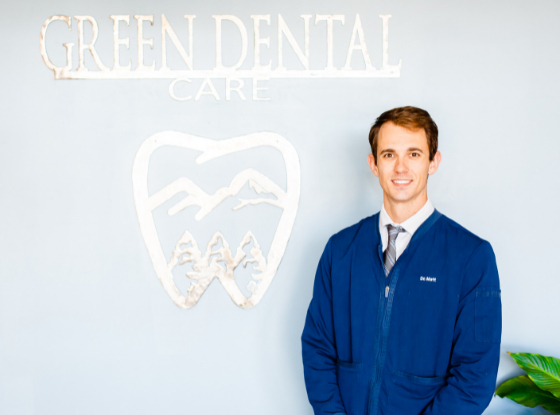
Each year, millions of people in the U.S. keep away from making a needed visit to the dentist because of dental anxiety. If you get the jitters each time you think of a dentist, you are not alone. The Green Dental Care team in Parker, CO, understands your concerns, which is why they provide conscious sedation to ease any fear or pain that you may have. This article gives you an overview of what you need to know about conscious sedation dentistry in Parker, CO.
Dr. Chris Green explains that conscious sedation refers to the ways through which a dental patient who panics or becomes anxious during a needed procedure can be helped to relax and go through that procedure comfortably.
The technique is called conscious sedation because you remain responsive throughout the procedure. The medication simply helps you to relax. This is different from general anesthesia that makes you unconscious until the medication wears off, or its effects are reversed by your Parker, CO dentist at the end of the procedure.
Green Dental Care can offer conscious sedation dentistry for patients who feel anxious or have a low pain threshold yet they need to undergo procedures like dental cleanings, cavity treatment, root canals and many other procedures. Discuss your dental fears with Dr. Chris Green, and he will determine your suitability for conscious sedation dentistry.
The drugs used during conscious sedation dentistry can be administered in a variety of ways depending on the specific circumstances of a patient. For example, you may simply inhale the sedative through a mask placed on your face. Alternatively, the dentist in Parker, CO, may give you a pill that you take before your appointment. Some sedatives can be administered by giving you a shot in your arm or butt. If the situation warrants, Dr. Chris Green can also administer the sedative intravenously (using an IV).
The mode of administration used has a bearing on how long you will have to wait before you start feeling the effects of the conscious sedation drugs that you have been given.
For example, sedatives administered orally could take anywhere between 30-60 minutes after ingestion while those given through an IV line kick in almost immediately. Dr. Chris Green will explain to you how long the sedative you receive will take to kick in before your procedure. Be assured that the professionals at Green Dental Care will not start the dental procedure until they are certain that the sedation is working as expected.
One key advantage of conscious sedation over general anesthesia is that conscious sedation wears off quickly. So, most people are able to go back home on their own. However, dentists in Parker, CO usually take the precaution of asking patients who undergo sedation dentistry to have a designated driver. The sedation usually wears off in an hour or so, but some side effects, such as feeling sluggish, could last the rest of the day.
Your Parker, CO dentist determine the degree to which you will be sedated after talking to you about your dental anxiety and other related factors. Three distinct stages of sedation exist.
The first is mild conscious sedation. This minimal sedation is also called anxiolysis. When you are minimally sedated, you become relaxed but remain fully aware of your surroundings and are responsive.
The second degree of sedation is moderate sedation. In this stage, you will be sleepy and may lose consciousness, but are still responsive to some extent.
Deep conscious sedation is a stage of sedation in which you fall asleep once the medication kicks in, and you will be unresponsive most of the time. This stage of conscious sedation is suitable for people with intense dental phobias.
Like any other medicine, conscious sedation also carries some risks, even if it is considered safe. To minimize these risks, Dr. Chris Green will conduct a detailed evaluation of your overall health before deciding to administer conscious sedation.
It is therefore helpful for you to give the Parker, CO dentist your medical history as well as information about any medication and supplements that you are taking. This information will help Dr. Chris Green to design an appropriate plan for the sedation dentistry procedure. He may postpone the treatment if he discovers any circumstance, such as pregnancy, which elevates the risks of undergoing sedation.
If you are afraid, apprehensive or anxious, let Dr. Chris Green know. Your Green Dental Care team will use conscious sedation to help you keep your attention focused on your dental health rather than on the discomfort that you experience each time you undergo a dental procedure.