Is Gum Disease Reversible?

Is Gum Disease Reversible?

Is Gum Disease Reversible?

Is Gum Disease Reversible?

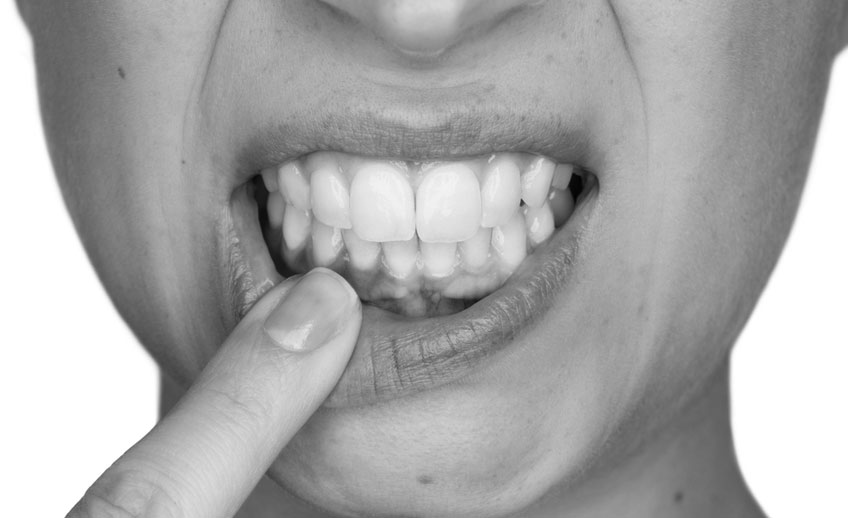
Gum disease, or periodontal disease, affects millions of people in the United States every year. It can cause bad breath, loose teeth, and even tooth loss if it is left untreated. But the good news is that gum disease is reversible if caught in its early stages. Here’s what you need to know about gum disease and how to reverse it.

What Causes Gum Disease?

Gum disease develops when plaque builds up on teeth and gums, not effectively removed by regular brushing and flossing. The bacteria in the plaque irritates and inflames the gums, leading to infection. Untreated, this infection can worsen and spread to other parts of your mouth and jawbone. This can lead to more serious dental problems such as tooth decay or even total tooth loss.

Reversing Gum Disease

Fortunately, there are steps you can take to reverse gum disease before it becomes a bigger problem. Start by practicing good oral hygiene: brush for two minutes twice a day and floss at least once daily. Regular dental check-ups ensure professional cleanings to remove any built-up plaque since your last visit. At these visits, your dentist may recommend treatments like scaling and root planing to remove deep-seated plaque below the gumline.

In more severe cases of gum disease, a periodontist—a specialized type of dentist near you—may recommend surgical options such as pocket depth reduction or flap surgery to remove infected tissue from around the teeth or gums. These procedures help reduce bacterial buildup so that healthy tissue can start growing again in its place.

Contact Green Dental Care Today!

With proper care, gum disease can be reversed before causing severe damage like tooth loss or decay, offering a positive outcome. At Green Dental Care here in Parker CO we believe prevention is key when it comes to reversing gum disease which is why we always stress regular dental checkups so we can spot any potential issues early on and treat them accordingly before they become larger issues down the road. If you think you may have an issue with your gums don’t hesitate – contact us today! We’re here to help!

The Best Dental Tools for Seniors

best dental tools for seniors

The Best Dental Tools for Seniors

Facts About Older Adult Oral Health

After age 50, your dental care needs change and the tools you used during your younger years may no longer cut it. For this reason, the doctors at Green Dental Care in Parker CO have come up with the following recommendations of appropriate dental-care tools to use once you enter your fifties.

Teeth Whitening Products

The passage of time takes its toll on your teeth leading you to notice that they aren’t as bright as they once were. Whether it is those cups of coffee you sipped on the daily or the wearing down of your tooth enamel, discoloration is likely going to occur. However, the right whitening products can help you to have a brighter smile.

Dr. Andrei Ionescu, a dentist in Parker CO, suggests that you get toothpaste that contains hydrogen peroxide. This toothpaste will gradually whiten your teeth. Alternatively, you can opt for a mouthwash whose ingredients list includes hydrogen peroxide. This mouthwash will also slowly whiten your teeth and prevent new stains from setting.

Your Manual Toothbrush

You should never use a toothbrush for more than three months. More than replacing it quarterly, pay attention to two key attributes of any manual toothbrush that you buy. First, Dr. Christopher Green recommends that you only buy a toothbrush if its bristles are soft or extra soft. These will do a good job of cleaning your teeth without harming your gums and enamel. Secondly, select a toothbrush whose bristles are angled or multileveled. These do a better job of removing plaque when compared to flat bristles.

Electric Toothbrushes

Various clinical studies have confirmed that electric toothbrushes are better than manual toothbrushes at removing plaque. Green Dental Care also recommends that you select an electric toothbrush that has an oscillating head rather than one with a vibrating head. The oscillating version does a superior job of preventing gingivitis and getting rid of plaque.

Mouthwash

Selecting the best mouthwash from the huge variety available can be daunting. To ease this task, Dr. Beth Herko, an experienced dentist in New Providence NJ, recommends that you pick a mouthwash that has chlorine dioxide, chlorhexidine, menthol, essential oils, and thymol among its ingredients. These ingredients will help kill oral bacteria decrease the chance of bad breath.

If plaque and gingivitis have been giving you the runaround, then Dr. Andrea Ionescu recommends that you select a mouthwash having chlorhexidine and cetylpyridinium chloride among its ingredients. Fluoride also increases the germ-killing power of the mouthwash.

Toothpaste

Not any toothpaste will do if you are a senior, says Dr. Christopher Green. He recommends that if you have noticed bleeding from your gums, then a toothpaste with stannous fluoride is the best for you. If your main concern is tooth sensitivity, then a toothpaste having potassium nitrate will ease your symptoms over time.

You may have heard about charcoal toothpaste or different forms of natural toothpaste. The experts at Green Dental Care warn against these products since they may be either too abrasive or ineffective at removing plaque from your teeth.

Dental Floss

Dental floss sticks have become increasingly common, but Dr. Andrei Ionescu warns against them saying that they are less effective than traditional string floss. This is because the sticks don’t wrap around your teeth well. Additionally, the floss sticks aren’t eco-friendly because they increase the amount of plastic discarded in the environment.

When shopping, select thicker floss strings rather than thinner ones. The thin ones can easily slip between your teeth, but they don’t do a good job of removing the plaque and food particles trapped in those gaps.

If you would like to use a water flosser, find one that can deliver water at a pressure between 50 and 90 psi. This amount of pressure is sufficient to clean between your teeth without putting undue stress on your gum tissue.

With those six tips for selecting the basic dental hygiene products, most of your bases will be covered. All that is left is for you to pay Green Dental Care a visit. One of our exceptional Parker CO dentists will assess your oral health periodically so that timely treatment can be provided should anything go wrong. Like fine wine that gets better with age, you too can enjoy superb dental health for a lifetime!


Treatments for Gum Disease

Periodontics-Gum-Disease-colorado

Treatments for Gum Disease

Periodontics-Gum-Disease-colorado

Gum disease refers to gum inflammation that gradually progresses to a level where the bone and other support tissues around your teeth become affected. Gum disease is identified by three clearly distinct stages (gingivitis, periodontitis and advanced periodontitis). Research done by the CDC (Centers for Disease Control and Prevention) found that nearly half of all Americans aged 30 and above suffer from periodontitis. While the disease may be common, the doctors at Green Dental Care assert that the progression of this disease can be arrested at any stage. The following are some of the available treatments for gum disease.

Nonsurgical Treatment for Gum Disease

The first way to treat periodontitis involves a nonsurgical approach called scaling and root planing (SRP). This conservative treatment can be done by a hygienist at Green Dental Care or by either Dr. Christopher Green or Dr. Andrei Ionescu. 

The process entails scraping the surface of the teeth and the roots in order to remove any calculus (tartar) and plaque that has accumulated there. After scaling, the treated surfaces are smoothened so that there are no rough spots where bacteria can thrive.

Dr. Christopher Green, an experienced dentist in Parker CO, explains that more than one visit is normally needed to complete the SRP treatment. Have no worries about pain; a local anesthetic will ensure that you will hardly feel any discomfort while you are being treated.

After a few weeks, the Parker CO dentist will examine you to see how well you are healing. If everything is okay, no further treatment will be recommended. If you aren’t healing as expected, then additional SRP may be done or another treatment option may be tried.

Pocket Reduction Surgery

After scaling and root planing, if deep gingival pockets (the gaps between the gums and the teeth) remain, another step that may be taken is to schedule pocket reduction surgery. Dr. Andrei Ionescu, a dentist in Parker CO, explains this process. The gum tissue is folded back so that the bacteria hidden behind the flap is removed. The sections of the bone damaged by bacteria are also smoothed so that your gums can reattach to your teeth again.

Gum Graft Surgery

When periodontal disease advances, it can cause gum recession that makes the roots of your teeth to be exposed. Sensitivity and other problems result from this exposure.  To fix this situation, the team at Green Dental Care may perform gum graft surgery.

Dr. Kacos a dentist in Shreveport LA, explains that the gum tissue will be taken from elsewhere, such as from your palate, and placed on the most affected roots of your teeth. Your teeth will no longer be sensitive and root decay will be arrested by this surgical intervention.

Must-Knows About Periodontal Disease

Periodontics-Gum-Disease-colorado

Must-Knows About Periodontal Disease

Periodontics-Gum-Disease-colorado

What You Should Know About Periodontal Disease

Periodontal disease is a common infection which damages the gums and alveolar bone surrounding one’s teeth. If left untreated, the condition can worsen and cause you to lose the affected teeth, in addition to causing other systemic health problems, such as heart disease. At Green Dental Care, we take this infection very seriously and take the following measures to address it.

The Preliminary Examination

As soon as you come in with a suspected case of periodontal disease, Dr. Green will take some gum measurements to ascertain the size of the gingival pockets. Gingival pockets are the gaps between one’s teeth and gums. If this pocket measures 3mm or less, you are regarded as normal. Bigger pockets which are 4-5mm wide signal gingivitis (the initial stage of periodontal disease). If your dentist in Parker, CO finds that your gingival pockets exceed 5mm, you will be categorized as someone suffering from periodontal disease and in need of urgent treatment.

Another step taken during your initial assessment entails getting intraoral images using a camera. These images reveal where plaque and calculus (tartar) have accumulated around your teeth.

Dr. Chris Green will also order dental x-rays in order to view the condition of the teeth beneath the gumline. The roots of your teeth have soft bone coverings called alveolar bone. Periodontal disease gradually eats away at this bone tissue in an irreversible process. The x-rays help to show to what extent this damage has occurred.

Treating Periodontal Disease

Once all this information has been gathered, Dr. Chris Green will design an appropriate treatment plan to address the specific magnitude of the gum disease. The following are some of the steps taken to treat periodontal disease at Green Dental Care in Parker CO.

Root Planing and Scaling: Root planing and scaling refers to the process by which a dental scaler or ultrasonic instrument is used to remove bacterial pockets and plaque or tartar from beneath the gumline. The objective is to prevent periodontal disease from getting worse. Scaling smoothens the surfaces from which bacteria has been removed so that further colonization doesn’t take place. This treatment procedure is done after administering a local anesthetic to deal with any pain triggered during the procedure.

Medication: Your dentist in Parker, CO may also opt to use medication alongside root scaling and planning as a way to treat periodontal disease. The medications range from prescription antibiotics, antibiotic gels, and prescription mouthwashes and rinses. These target the microorganisms in your gums and teeth in order to bring down inflammation and allow the gums to heal.

Surgery: Some severe cases of periodontal disease may require surgical intervention in order to treat the infection. For example, the professionals at Green Dental Care may recommend flap surgery as the only feasible way to remove the bacteria which is lodged deep within your gum tissue. Flap surgery can also be performed to remove a section of the gum so that what is left fits optimally on the tooth affected by periodontal disease. Tissue and bone grafts may also be performed to cover the parts of roots which have been exposed as a result of periodontal disease.

Regardless of the treatment option selected, Dr. Chris Green will advise you to pay additional attention to your oral care at home. This added vigilance is necessary to prevent recolonization by bacteria.

Your treatment may also require several visits, especially if the problem was extensive. If one visit is enough, another follow-up visit may be scheduled after three months to clean out the gingival pockets and to monitor how well you are healing. Don’t miss this follow-up visit because you will not know whether additional treatment is required or what you received was sufficient.

As already mentioned, the initial stage (gingivitis) of periodontal disease can be reversed by paying more attention to your oral hygiene. As the disease progresses, it causes damage which is irreversible. Contact Green Dental Care and schedule an appointment as soon as you suspect that you could be having periodontal disease. The sooner you commence treatment, the higher the chance that the disease will be stopped before it causes extensive damage to your oral health.